
Classical & Jazz Concerts
The Gould Piano Trio
Saturday 6th November 2021, 7:30pm
Pinner Parish Church
Mozart, Clarke, Dvorak 'Dumky' Trios
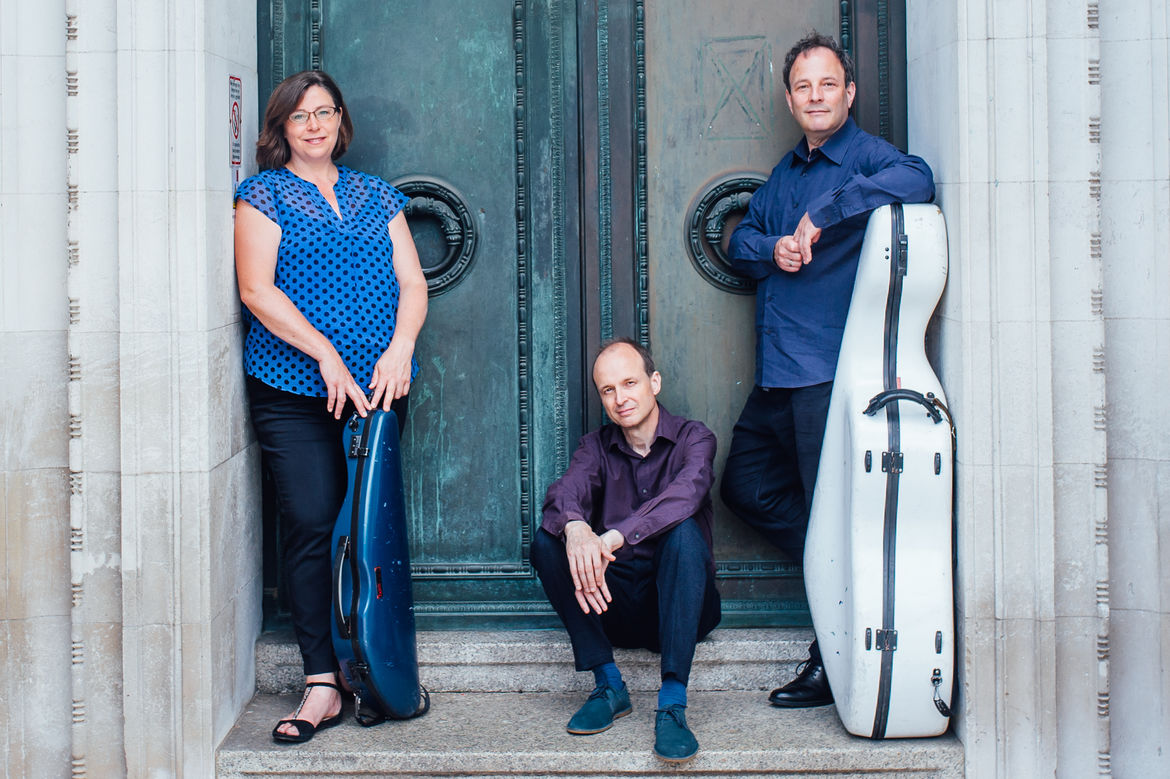
Lucy Gould (violin)
Richard Lester ('cello)
Benjamin Frith (piano)
The Gould Piano Trio bring us three Trios that span some 130 years and that show the breadth and diversity of the medium in the hands of three distinctive composers.
Trio in G major (K564) (1788) Wolfgang Amadeus Mozart (1756-1791)
Allergo
Andante (Thema mit Variationen)
Allegretto
Mozart wrote seven Piano Trios through his short life, with the last three being written in 1788, of which this is the last. It has all the composer’s hallmarks of melodic invention and charm, with the three instruments being given equal weight. This work was the only piano trio that was first published in England, probably for players whom Mozart knew well. A wonderfully enjoyable compact work by a master of his art.
Trio (1921) Rebecca Clarke (1886-1979)
Moderato ma appassionato
Andante molto semplice
Allegro vigoroso
The peremptory call to attention at the outset of this work by Harrow-born composer and violist Rebecca Clarke leaves one in no doubt about the passionate mood of this work. It was written as she achieved her compositional maturity, and a couple of years after her similarly dramatic Viola Sonata – and shares with it the sense that she was working through some powerful emotions at the time, as well she might have, both in her own difficult early family life and in reflecting on the impact of the Great War. She later said she preferred the Trio.
Trio in E minor Op. 90 – Dumky (1891) Antonín Dvořák (1841-1904)
Lento maestoso
Poco adagio
Andante
Andante moderato
Allegro
Lento maestoso
The best-known of Dvořák’s Piano Trios, this work is the most Slavic in style, being based on a musical form originating in Ukraine – a type of lament, in his hands with alternating slow and fast sections, “both happy and sad”, as he described it. In this work, Dvořák uses six dumkas in this very original work, although the first three are played almost without a break, as if it were a fuller opening movement, with the last three forming the rest of a more familiar four-movement structure: slow, scherzo and finale. The result is a highly original and very engaging work.
The Gould Piano Trio, directly compared to the great Beaux Arts Trio for their ‘musical fire’ and ‘dedication to the genre’ in the Washington Post, have remained at the forefront of the international chamber music scene for a quarter of a century. Launched by their first prize at the Melbourne Chamber Music Competition, they were ‘ECHO Rising Stars’, making a highly successful debut at the Weill Recital Hall in New York’s Carnegie Hall, being described by Strad Magazine as ‘Pure Gould’. Their many appearances at London’s Wigmore Hall have included the complete piano trios of Dvorak, Mendelssohn and Schubert - plus in the 2017-18 season, a Beethoven cycle, to celebrate 25 years since their first appearance at this iconic venue.
Commissioning and performing new works is an important part of the trio’s philosophy of staying creative and freshly inspired. Sir James MacMillan’s 2nd Piano Trio was written for them in 2014 and premiered at the Bath International Festival that season. 2017 featured the Goulds in the Hull ‘City of Culture’ celebration, performing former BBC Young Musician, Mark Simpson’s ‘After Avedon’ as part of the PRS ‘New Music Biennial’. The annual Corbridge Chamber Music Festival, presented by the trio together with clarinetist Robert Plane, celebrated its 20th Anniversary with a commission from Huw Watkins - his ‘Four Fables’. It is scored for clarinet and piano trio, an instrumentation made famous by Messiaen in his ‘Quartet for the End of Time’ which also forms part of their discography with Plane.
The Gould Trio’s extensive tours of N. America, the Far East, New Zealand, and Europe are interspersed with masterclasses to nurture the next generation, at institutions such as the Guildhall School in London, the Britten-Pears Young Artist Programme at Snape and Dartington Summer School.
In addition to their highly praised recordings of the standard works (including the Dvorak Trios), the trio have thrown light on neglected gems from the late romantic British repertoire with recordings for Naxos and Chandos, including C.V. Stanford’s and John Ireland’s piano trios, plus works by Bax, Milford, York Bowen and Cyril Scott. Recently released is a recording entitled ‘Stolen Airs’ of music by Northumbrian composer John Casken. Future plans include a recording on Resonus Classics of American twentieth century works: the somewhat French inspired piano trios of Amy Beach and Rebecca Clarke together with Charles Ives’ trio - a vivid and distorted reimagining of his own East Coast popular culture.
This product is currently unavailable.

Pinner Parish Church
Church Lane
Pinner
Middlesex HA5 3AA

Website by Beachshore